
Understanding & Preventing Boston Terrier Health Issues
A deep love for the breed means that improving overall Boston Terrier health is at the forefront of our breeding program. While some health concerns are inherent to the breed and cannot be completely eliminated, many others can be minimized or avoided through responsible breeding, proper care, and informed ownership.
Below are important health topics every potential Boston Terrier owner should understand before bringing a puppy home.
Boston Terrier Brachycephaly (Short-Nosed Breed Concerns)
All Boston Terriers are considered brachycephalic. “Brachy” means short, and “cephalic” refers to the head. This adorable, flat-faced structure is part of what makes the breed so adorable and recognizable, but it also comes with challenges.
Because of their shortened airways:
- They can struggle to regulate body temperature
- They are more sensitive to heat and humidity
- Exercise tolerance may be limited
- Snoring and noisy breathing are common
Owners must be mindful of:
- Avoiding strenuous activity in warm weather
- Providing cool, well-ventilated environments
- Watching for signs of overheating (panting, lethargy, distress)
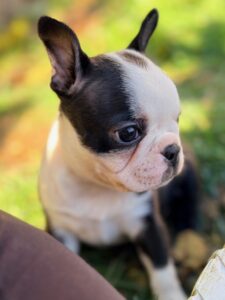
Boston Terrier Eye Health: Cherry Eye, Injuries & JHC
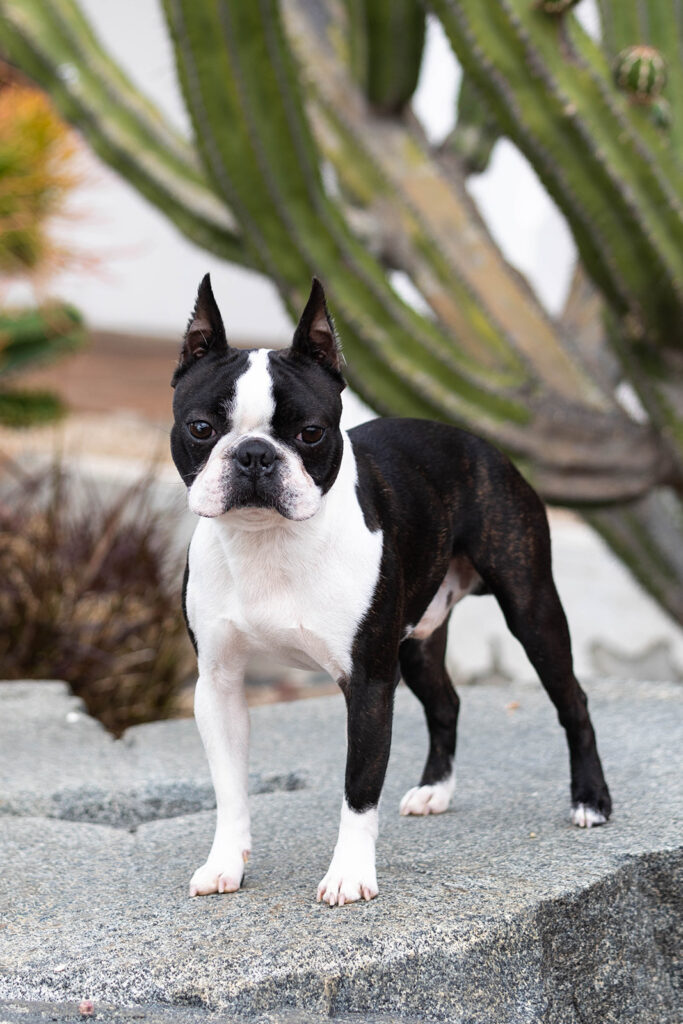
Why are Bostons prone to eye issues?
Boston Terriers eyes are big and expressive! While they are cute, their eyes are quite prone to injury. Care should be taken to keep your Boston from injuring its eyes.
Common Eye Concerns
- Injury from brush, sand, or rough play
- Corneal scratches or ulcers
- Sensitivity to environmental irritants
Preventative care includes:
- Avoiding dense brush or debris-filled environments
- Monitoring play with other pets
- Checking eyes regularly for redness or discharge
Cherry Eye
Cherry eye occurs when the third eyelid gland becomes inflamed and protrudes.
- May respond to drops or medication
- Sometimes requires surgical correction
- Massage should only be attempted with extreme caution
Juvenile Hereditary Cataracts (JHC)
JHC is a serious genetic condition that can cause blindness at a young age. The good news:
- There is a simple, inexpensive DNA test
- Responsible breeders can completely prevent it
We guarantee that none of our puppies will ever be affected by JHC, as all breeding dogs are tested clear.
Deaf Boston Terrier? Hearing & Deafness in Boston Terriers
Approximately 5% of Bostons are Deaf. That is a high percentage compared to most breeds! It is recommended that Boston Terrier puppies have a BAER test performed before they go home so it can be determined if they are unilaterally or bilaterally deaf.
Approximately 5% of Boston Terriers are deaf, which is higher than many breeds.
BAER Testing
We perform BAER (Brainstem Auditory Evoked Response) testing on all puppies to determine hearing ability.
Types of hearing status:
- Normal hearing
- Unilateral deafness (one ear)
- Bilateral deafness (both ears)
Unilateral deafness can be difficult to detect without testing, as dogs adapt extremely well.
Important Notes
- Coat markings (especially excessive white) may be linked—but are not a guarantee
- Even two hearing parents can produce deaf puppies
Our program:
- Does not breed deaf dogs
- Avoids excessive white markings
- Tests all puppies before placement
This ensures transparency and helps prevent deaf dogs from entering breeding programs.
While some dogs with excessive white markings have been diagnosed as deaf, there are those with no excessive white that have also been diagnosed deaf. So just breeding for no excessive white on the face is no guarantee to eliminate deafness. There also have been many cases where 2 BAER tested clear parents have produced deaf puppies. Therefore, we do everything we can as breeders: only breed Dogs without excessive white and that are not unilaterally or bilaterally deaf. Unfortunately this is not a guarantee. We still BAER test all puppies coming from our program to give the new owners a clear picture of their puppy’s hearing and to prevent deaf puppies from going into a breeding program.
What are some other common Boston Terrier health issues?

Boston Terrier Patellar Luxation (Knee Issues)
Boston Terriers are prone to loose kneecaps (patellar luxation).
Our Approach
- All breeding dogs are OFA evaluated
- We avoid breeding dogs with moderate to severe issues
What Owners Can Do
Environmental factors play a huge role. To help protect your puppy:
- Avoid excessive running before maturity
- Prevent jumping off furniture
- Limit exposure to slippery floors
- Use rugs or traction surfaces
Joint Support
Early joint care can make a difference:
- High-quality nutrition
- Joint supplements (as recommended by your vet)
- Maintaining a healthy weight
Skin & Allergy Issues
Boston Terriers can be prone to skin sensitivities and allergies. This is a Boston health issue that we do not tolerate in our program. We do not breed any parents that show signs of skin allergies and therefore these do not run in our lines, however each dog is an individual and can develop skin sensitivities.
Common signs include:
- Itching or scratching
- Red or inflamed skin
- Ear infections
- Paw licking
Management Tips
- Feed a high-quality, consistent diet
- Avoid frequent food changes
- Monitor environmental triggers (grass, dust, etc.)
- Keep ears clean and dry
Our Commitment to Health
While no breeder can guarantee a completely problem-free dog, we are committed to:
- Health testing all breeding dogs
- Selecting for structure, temperament, and function
- Raising puppies in a safe, enriched environment
- Providing transparency and education to our buyers
We strongly encourage all owners to:
- Maintain regular veterinary care
- Invest in pet insurance
- Stay informed about breed-specific needs